Why Do We Go to War? The Biology and Mathematics of Conflict
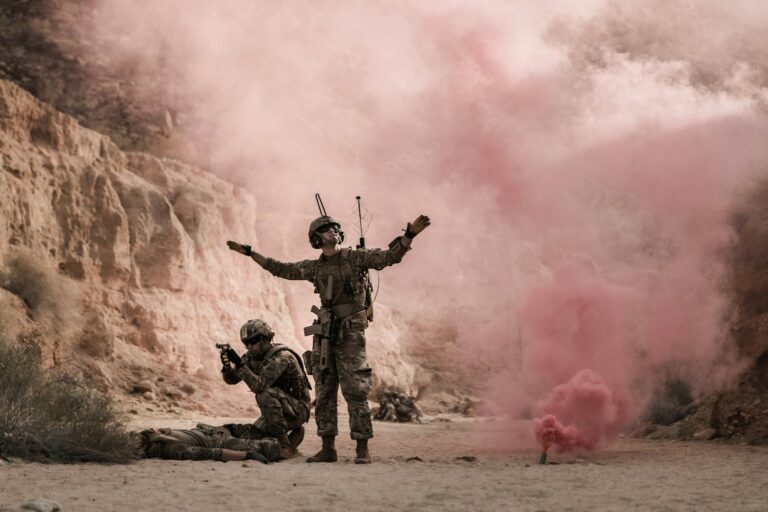
Why do we go to war? Is war a glitch in human brain? Why our brain separates US from THEM? We try to understand the reasons of death, destruction and misery of war beyond morality.

Why do we go to war? Is war a glitch in human brain? Why our brain separates US from THEM? We try to understand the reasons of death, destruction and misery of war beyond morality.
Too much information, too little attention - this can be the tagline of current time. Here, 3 practical mental models are presented which can save us from information overload in the long run.

People lie. They are simple non-complicated lies. But Corporations and Governments lie with skill and statistical manipulation. They are complicated. How do they lie using truth?

A medical test for a disease is 99% accurate. This means, If you have the disease, the test will say "Positive" 99% of the time. If you don't have the disease, the test will say "Negative" 99% of the time. The result comes back Positive. Should you panic given the fact that 1 in 1000 people actually has the disease?

So many news, so much information - How do you know which claims are correct and which are not? If a newspaper writes an article starting 'A recent study said that' - should you believe the article? Carl Sagan gave a common man's toolkit to detect BS.

Throughout my life, whenever faced with a smart, intellectual-looking person with a greater depth in a subject compared to me but with a high dose of cynicism and rudeness, I have always assumed that smartness comes in a package- smart…

[Read Part 1] [Read Part 2] [Read Part 3] Modern psychology research has a WEIRD bias, relying heavily on participants from Western, Educated, Industrialized, Rich, Democratic societies. Scientists long assumed that human minds everywhere work the same, but evidence shows WEIRD people are…

[Continued. Read Part 1] [Read Part 2] [Read Part 3] Modern psychology research has a WEIRD bias, relying heavily on participants from Western, Educated, Industrialized, Rich, Democratic societies. Scientists long assumed that human minds everywhere work the same, but evidence…

[Read Part 1] [Read Part 2] [Read Part 3] Introduction Modern psychology research has a WEIRD bias, relying heavily on participants from Western, Educated, Industrialized, Rich, Democratic societies. Scientists long assumed that human minds everywhere work the same, but evidence…
In the world of literature written in Indian languages, Prodosh C. Mitter, better known as Feluda, stands as an unwavering beacon of logic and the quintessential gentleman rationalist. For him, crime is a problem of flawed reasoning, a puzzle to…