
In the world of literature written in Indian languages, Prodosh C. Mitter, better known as Feluda, stands as an unwavering beacon of logic and the quintessential gentleman rationalist. For him, crime is a problem of flawed reasoning, a puzzle to be solved not with force, but with the application of his formidable “mogojastro,” or brain-weapon. Satyajit Ray, the renowned polymath, created Mr. Mitter, to provide simple who-dun-it and how-dun-it amusement while teaching rationality. It is this core identity that makes a specific scene in the long story “Samaddar’s Chabi” (Samaddar’s Key) so profoundly intriguing.
In a passage, Feluda introduces his young cousin Topshe to a book about “Dr. Matrix,” a figure who claims that numbers hold a “wondrous influence” over human lives. To illustrate this, Feluda presents a stunning list of parallels between the assassinations of U.S. Presidents Abraham Lincoln and John F. Kennedy.
The conversation goes something like this (The stories are written from Topse’s POV.).
“ The book is about Dr. Matrix. Feluda was saying that according to this Dr. Matrix, the concept of numbers apparently has a wondrous influence on people’s lives. Apparently, if one looks behind many ordinary and extraordinary events, various ‘plays on numbers’ can be discovered.
The concept wouldn’t have been quite clear to me if Feluda hadn’t explained it with an example from the book. He said, ‘Listen to one of Dr. Matrix’s wondrous discoveries. You know that two famous American presidents were assassinated, right?’
‘Lincoln and Kennedy?’
‘Yes. Alright, how many letters are in each of their names?’
‘L-I-N-C-O-L-N – seven. K-E-N-N-E-D-Y – seven.’
‘Good. Now listen – Lincoln became president in 1860, and Kennedy in 1960 – exactly one hundred years later. Both were killed on a Friday. At the time of the assassination, both of their wives were beside them. Lincoln was killed in a theater; the name of that theater was Ford. Kennedy was killed in a motor car. It was a car made by the Ford company. The name of the car was Lincoln. The man who became president after Lincoln was named Johnson, Andrew Johnson. After Kennedy, the one who became president was Lyndon Johnson. The first one was born in 1808, the second one was born in 1908 – exactly one hundred years apart. Do you know the name of the man who killed Lincoln?’
‘I used to know, but I’ve forgotten.’
‘John Wilkes Booth. He was born in 1839. And the one who killed Kennedy was Lee Harvey Oswald. He was born exactly one hundred years later – in 1939. Now, look at the two names one more time. John Wilkes Booth – Lee Harvey Oswald – how many letters are in each name?’
After counting the letters, I was stunned. I gulped and said, ‘Fifteen in both!’ ”
The idea of this article is to see these claims closely and understand what we can learn from this. Let’s break the quoted text into individual claims and verify if they are true. (Or you can just go here and read the wiki about this. Snopes has a good article on this, too.)
(Rule: When we are subtracting two DD/MM/YYYY, let’s follow the rule of standard rounding. This means 9 years 8 months will be rounded as 10 years, but 9 years 2 months will be rounded as 9 years.)
1) “Lincoln and Kennedy” each have seven letters. True.
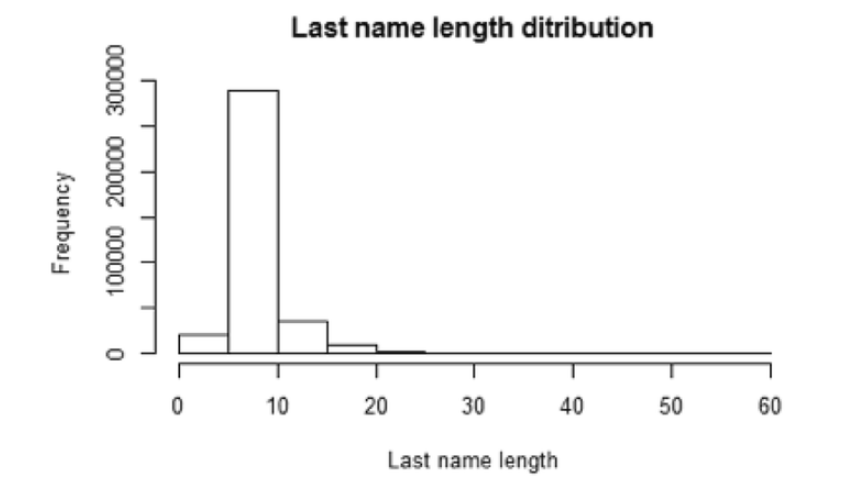
Okay, Now how rare is this? An article on rare disease detection chose to truncate the names of the children to 10 characters in their systems because they found the median length of the last name of American children in their sample is 7.1.
2) Lincoln became president in 1860 (Nov. 6, 1860), and Kennedy in 1960 (Nov. 8, 1960), exactly one hundred years later. True.
According to the US constitution, you do not become a president when the election results come, you have to be certified and be inaugurated as a president. Here, the election and inauguration both were 100 years apart. (Notice that, if any two presidents are compared, their election-win will be rounded number years apart. This is because, US election happens on a specific Tuesday of November, 4 years apart.)
3) Both were killed on a Friday. Lincoln was shot on Friday 14 April 1865 (Good Friday). Kennedy was shot Friday 22 November 1963. That is correct. So this is true.
After Lincoln’s death on Friday, there was a 1/7 ~ 14% chance that the other will be on Friday.
4) At the time of the assassination, both of their wives were beside them. True.
For Lincoln: yes his wife Mary Todd Lincoln was present at Ford’s Theatre. For Kennedy: yes Jackie Kennedy was with him in the motorcade.
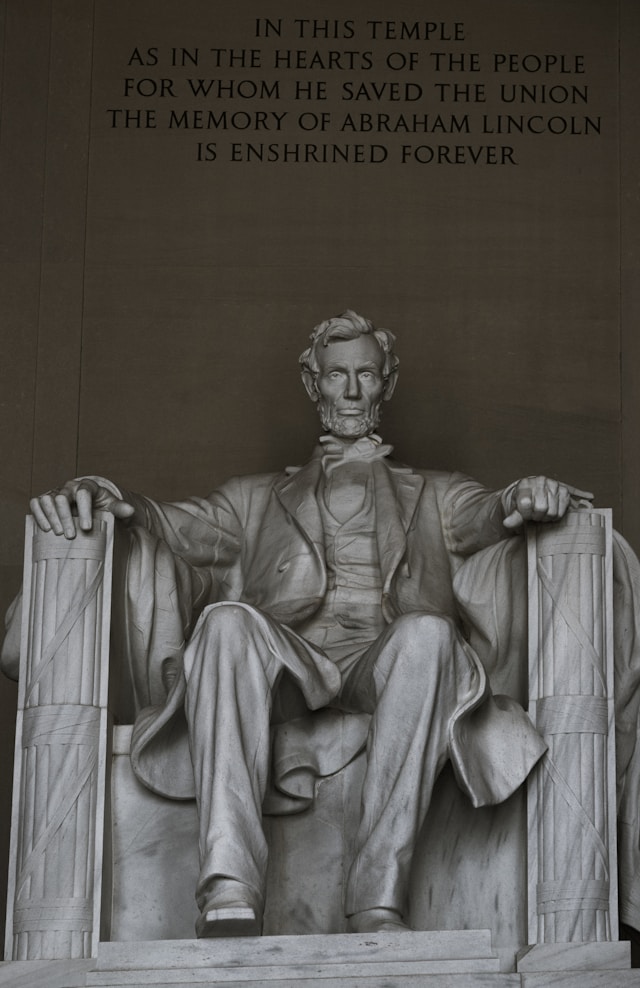
5) Lincoln was killed in a theatre; the name of that theatre was Ford. True.
Lincoln was shot at Ford’s Theatre in Washington. Correct.
Here one should know that at that time, there were three major American car makers, dubbed as ‘The Big Three’ – Ford, General Motors and Chrysler. For white house fleet, traditionally there have been rotations between Ford Lincoln and GM’s Cadillac.
6) Kennedy was killed in a motor car. It was a car made by the Ford company. The name of the car was Lincoln. True.
Kennedy was killed while riding in the presidential motorcade limousine, a Lincoln Continental manufactured by Ford. Yes, widely reported: the car was a Lincoln Continental (Lincoln is Ford’s luxury brand) made by Ford Motor Company. So this claim is essentially accurate.
7) The man who became president after Lincoln was named Johnson, Andrew Johnson. After Kennedy, the one who became president was Lyndon Johnson. True.
After Lincoln came Andrew Johnson. After Kennedy came Lyndon B. Johnson. How common is the last name Johnson? Well, it is the second most common last name in the USA. In 2010, almost 2 million people had this surname. One can assume that popular American surnames such as Smith, Williams, and Johnson have been prevalent over the last two centuries.
8) The first one (Andrew Johnson) was born in 1808, the second one (Lyndon Johnson) was born in 1908, exactly one hundred years apart. True.
Andrew Johnson was born December 29, 1808. Lyndon B. Johnson was born August 27, 1908. So yes, they were born in the years 1808 and 1908, exactly 100 years apart (99 years 7 months 29 days).
9) Do you know the name of the man who killed Lincoln? … John Wilkes Booth. He was born in 1839. And the one who killed Kennedy was Lee Harvey Oswald. He was born exactly one hundred years later — in 1939. Contains False Info.
- First, assassin names: Lincoln’s assassin was John Wilkes Booth. Correct.
- Kennedy’s assassin was Lee Harvey Oswald. Correct.
- Booth’s birth year: actually John Wilkes Booth was born May 10, 1838 (not 1839).
- Oswald’s birth year: Lee Harvey Oswald was born October 18, 1939.
So the claim that Booth was born in 1839 is false, and the statement of “exactly one hundred years later” is wrong because the difference is 101 years (1838 → 1939) or even mis‐dated if using 1839. The alleged 100 year gap is not accurate. So this is false.
10) Now, look at the two names one more time. John Wilkes Booth – Lee Harvey Oswald – how many letters are in each name? … Fifteen in both! True.
Counting letters (ignoring spaces probably) in “John Wilkes Booth” (J-o-h-n =4; Wilkes=6; Booth=5) totals 4+6+5 = 15. That checks. “Lee Harvey Oswald” (Lee=3; Harvey=6; Oswald=6) totals 3+6+6 = 15. Yes, 15.
Summarising the above: of the 10 distinct claims, at least 9 are essentially correct; the one about Booth’s birth year is wrong.
So what?
Now let’s see the bigger picture. Booth was an actor and was often billed as J. Wilkes Booth or just John Wilkes. This was to distinguish him from the other actors in his family.
Oswald was never known by all three parts of his name before the assasination of Kennedy. Because of his frequent use of false identities, including variations on his own name, Dallas police started using his full name for specificity.
Although both were born in the South of the USA, Booth regarded himself as a ‘Northerner who understood the South’. The fact that both were born in one of two populous regions of the United States should not be striking.
Finally, although Lincoln was assassinated in a theatre, his assassin, Booth, was caught in a tobacco barn on a rural farm, not a warehouse. Oswald shot Kennedy from a book depot in the middle of Dallas and was later caught in a movie theater (Just the facts which did not match the coincidence).
We could find ten thousand other pieces of information, such as the number of children each assassin had, their fathers’ names, or their marital status which may not match. We could also note that JFK was known as a womanizer, while Lincoln was not. If we mix these details with the nine coincidences mentioned earlier, we would see far more non-similarities than similarities.
Why this myth persists and the rationality lessons
Having dissected the claims, what are the broader lessons for rational thinking and scepticism? Here are some major points:
- Selection bias & retrospective construction
The list is clearly constructed by choosing facts selectively that “look good” numerically (7 letters, 100 years apart, etc.), while ignoring many dissimilarities (different birth years of the presidents, different ages, different terms, political parties, etc.). As the sceptical website Snopes.com puts it:
“No striking coincidences or convenient hundred-year spans in any of those facts” when you look deeper. It’s very easy to cherry-pick facts once you begin with the motif “two assassinated presidents” and search for parallels. - Law of large numbers and inevitable coincidences
With so many potential attributes (birth year, death year, election years, letters in names, weekdays, successor names, etc.), some coincidences are almost inevitable just by chance, as I mentioned. The existence of, say, “both shot on Friday” isn’t so surprising when you consider there are seven weekdays. Each event has a numerical probability. When you combine them, the overall probability is small but still means it’s bound to happen. - Numbers as seductive narrative hooks
Humans like patterns. The idea that numbers “play” behind real events appeals to our search for meaning. That is the kernel of the “Dr. Matrix” story, that numbers subtly influence lives. In his book The Magic Numbers of Dr. Matrix, Gardner shows how this type of numerological folklore can be entertaining, but also that one must apply critical examination.
The myth works because it mixes enough truth to be compelling, then adds the “just‐coincides” or “round number” effect (100 year gap, 7 letters, 15 letters) to add mysterious flavour.
Coming back to Feluda
Satyajit Ray created Feluda to embody rationality, yet he didn’t intend the character to be entirely free of irrationality. This is clear from a rare instance where Topshe, Feluda’s assistant, rationally contradicted him.
In ‘Samaddarer Chabi’, Feluda claims that urban dwellers have weaker eyesight than their rural counterparts, attributing this to an evolutionary preference for greenery. However, Topse questions this assertion, noting that Feluda, a resident of a major city, does not wear glasses. Topse might be right about this, even if the prevalence of myopia may be higher in urban areas, this is mainly due to environmental and lifestyle reasons, rather than the evolutionary cause Feluda mentioned.
Implications for rational thinking
- When you see a “pattern of coincidences”, ask for the full dataset
Are we only hearing the “hits” (the things that match) and not the “misses” (where things don’t match)? In the Lincoln–Kennedy list, many dissimilarities are omitted (birth years, ages, number of children, re-election status, party, etc.).
Always ask: how many attributes were looked at? How many matches were found? Does this exceed what chance would allow?
- Beware of round numbers and retrospective rounding.
- Check the truth of each individual claim
Just because the narrative sounds coherent doesn’t mean each piece is accurate. In our case, Booth’s birth year is wrong; the “secretary Kennedy” claim is wrong. Mistakes creep in easily and often go uncorrected. - Distinguish “interesting coincidence” from “meaningful connection”
A coincidence can be interesting and cause us to pause and reflect. But a meaningful connection requires more than numbers lining up: causation, mechanism, independent validation.
📚 Recommended Reads
-
Complete Adventures of Feluda Vol.1
-
How to Expect the Unexpected
The Science of Making Smart Predictions
🔗 Amazon |
Amazon India